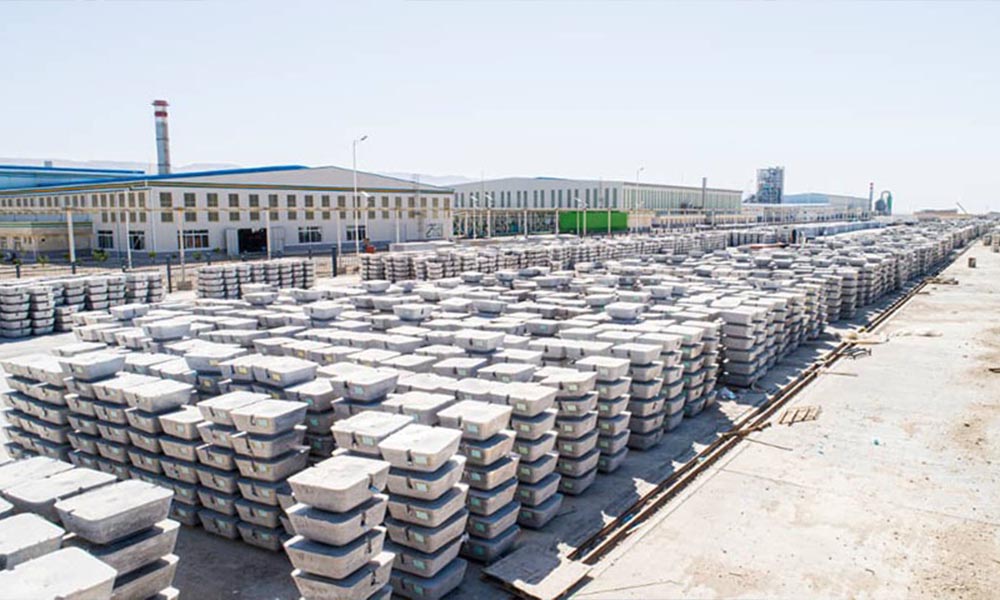
The basic method of producing primary aluminum consists of 4 basic parts, each part of which is explained below.
ore mining
It is extracted from a rock called bauxite. Bauxite contains aluminum oxide, aluminum hydroxide, and many other impurities that are not desirable for aluminum production. The process of extracting bauxite is one of the dirtiest extraction processes because this rock is found in areas with good climates (forests) such as South America, the Amazon rainforest, southern India, etc. Bauxite was created from the weathering of rocks such as granite and basalt, which contain large amounts of aluminum. refinement After the extraction stage, the bauxite is taken to the alumina refinery. Alumina is aluminum oxide, and the difference between alumina and oxide is that alumina is much purer. The impurities present are: Presence of 3 to 25 percent iron The presence of silicaPresence of titanium oxidePurification process Caustic soda (NaOH) is used for purification. In this way, bauxite powder is poured into a caustic soda solution at high temperature and pressure of about 4 atmospheres and the reaction is allowed to occur.In this process, the only part of the bauxite that reacts is aluminum. This process is called digestion. After this process, it enters the next stage, where there are very large tanks. In these tanks, the temperature of the solution is lowered, allowing all the elements to settle out, leaving only the combined aluminum on the surface. After removing the impurities and performing the reaction in reverse (low pressure + low temperature), aluminum oxide is formed, which is in the form of a wet powder. This wet powder is poured into long, generally horizontal furnaces, and as the furnace heats up, along with the gentle slope, the dried, pure aluminum oxide powder exits the bottom of the furnace. This powder is the raw material for aluminum production.
Adding cryolite
At this stage, we need to add some cryolite to the obtained powder, cryolite lowers the melting temperature of alumina. To prepare cryolite, aluminum oxide is reacted with its compounds and cryolite is obtained.ReductionThe reclamation process takes place in very large factories, and most of these huge factories are built near the sea, due to easy access to raw materials, which are often transported by ship. These factories have very high energy consumption. In these factories, special units are repeated in dimensions of 8 meters by 4 meters by 1 meter, each of which is an electrolysis cell. In these boilers, an electrolysis reaction occurs. In this way, an electric current is introduced and electrical energy is given to the solution containing cryolite and aluminum oxide through the anode and cathode, and this energy causes the ion to be reduced at the cathode and the oxygen to be reduced at the anode.AndesDue to high temperatures, electrical conductivity, etc., they are made of graphite. The main problem with these anodes is that due to the presence of carbon, oxygen, and high temperatures, the carbon reacts with the oxygen and is released, and after a while these anodes run out.Secondary method of aluminum productionAluminum recycling symbol. Another method of producing aluminum is known as secondary production. This method is an important source of aluminum production. In this method, scrap aluminum parts and recycling of these parts are used for production. Secondary aluminum production requires only 5% of the energy consumed in the primary production method, and for this reason, it is always receiving great attention. In addition to the significant reduction in energy consumption in this method compared to the primary aluminum production method, each kilogram of aluminum produced in this method is equivalent to saving 8 kilograms of bauxite and 4 kilograms of other chemicals. This process consists of 5 steps:
- Collection
- Sorting
- Reprocessing
- Rolling
- Conversion